 NOUS Team
How AI Handles TPMS Questions at Tire Shops
5 min read
NOUS is an AI phone answering service built specifically for tire shops across North America.
Your phone rings while you're halfway through a TPMS reset on a customer's Subaru. "Hi, my dash light is on for tire pressure. Do I need new sensors?" You wipe your hands, but by the time you grab the phone, it stops.
That call? Gone to the chain down the street. **Independent tire shops handle 10-15 TPMS questions weekly per bay (Tire and Rubber Association of Canada).** Those queries pull you from the bay, where TPMS tasks already eat 15-20 minutes per vehicle (Modern Tire Dealer 2023 survey).
Peak hours make it worse. **62% of calls to small auto shops go unanswered during busy times (NOUS customer data).** Add that 85% of callers won't leave a voicemail. They just dial the next shop (industry average). Your average missed tire job? Worth $400 or more in lost revenue (NOUS customer data).
The average tire shop misses 8-12 calls per day during busy periods (NOUS customer data). With over 60% of light vehicle tire services now involving TPMS diagnostics or resets (Tire and Rubber Association of Canada), those unanswered rings mean lost alignments, rotations, and sensor jobs.
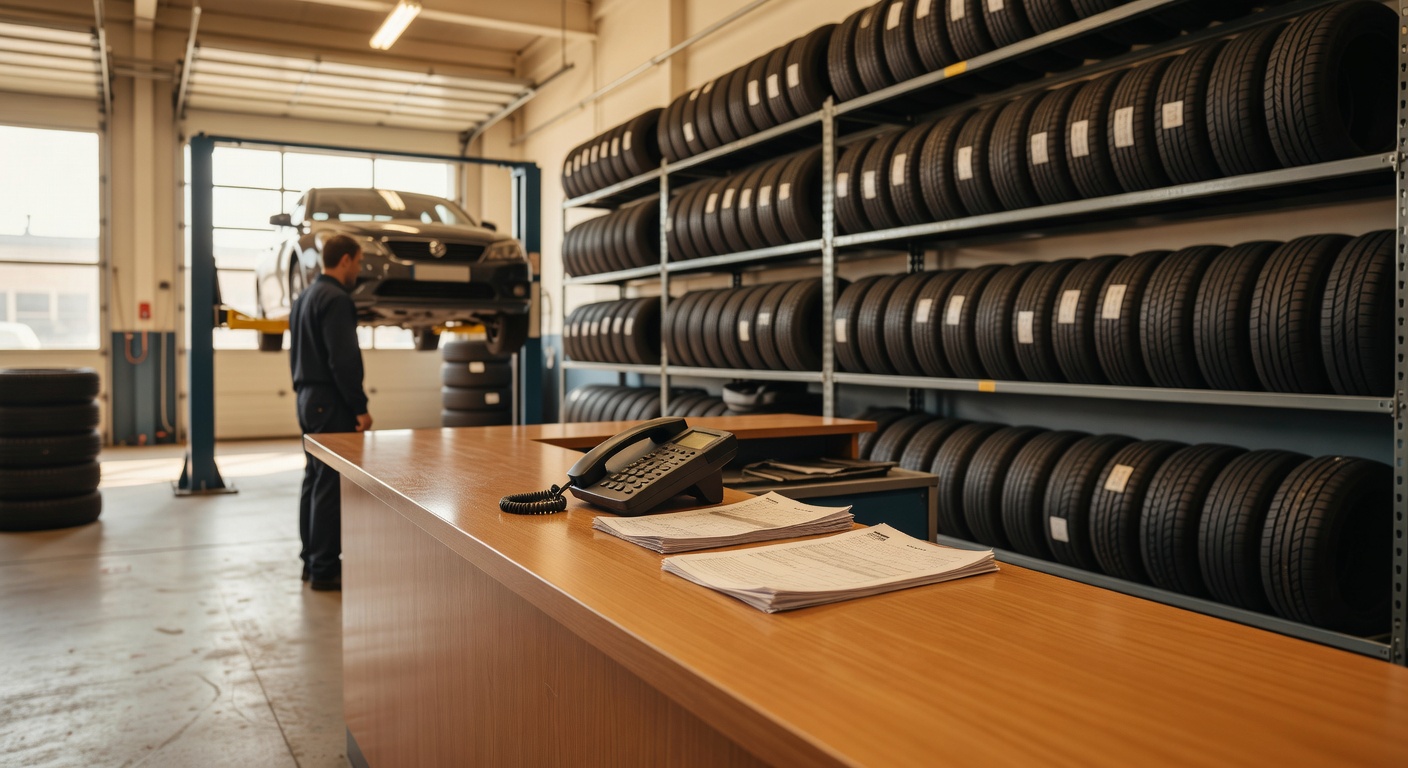
You run a tight ship with 1-20 employees. Techs are in the bays chasing dash lights from harsh Canadian winters. Front desk? Overloaded or nonexistent. **You care about every call, but answering them all means jobs pile up unfinished.**
Common TPMS Questions Tire Shops Face Daily
Customers call panicked about that blinking TPMS light. They ask if it's low pressure, a bad sensor, or something else. In Canada, winters spike these issues by 30% in Ontario alone (Ontario Ministry of Transportation data).
Top questions include: "Why is my light on after airing up?" or "Do I need to reset it after new tires?" Shops deal with direct vs. indirect systems too. Direct ones use wheel sensors. Indirect rely on ABS data. **Inconsistent relearning across makes like European imports leads to callbacks (Canadian tire industry reports).**
Counterfeit sensors flood the aftermarket. Customers report failures after just months. Repair costs hit $150-300 per wheel (Canadian Black Book). Harsh salt on Ontario roads corrodes valve stems, mimicking dead batteries.
Your team spends time educating on OBD-II codes or OEM steps. But with labor rates at $120-150/hour, every minute chatting costs revenue. AI steps in here. It parses symptoms fast. No more pulling techs from bays. This matches what we covered in what an AI receptionist does at a tire shop. (187 words)
How AI Accurately Fields TPMS Questions for Your Shop
AI isn't guessing. It's trained on OEM procedures, TPMS protocols, and real shop data. When a caller describes a Ford F-150 light staying on post-rotation, AI guides them: "Drive above 32 km/h for relearn, or use your key cycle method."
It differentiates systems. For Toyota RAV4s common in Calgary, it flags valve corrosion from salted roads. Suggests inspection over replacement. **This cuts resolution from 25 minutes to under 2 (Toronto-area shop example).** AI knows direct TPMS needs scan tools for some resets. Proprietary ones cost $2,000+. But it tells customers when to come in booked.
Global TPMS market hits $2.5 billion by 2028 (industry projection). Aftermarket replacements drive it. AI educates on battery life (5-10 years) and frequencies (315/433 MHz mismatches). It books jobs seamlessly. Ties into inventory too. Like in our post on real-time inventory integration for tire shops. No overpromising stock. Customers hear accurate ETAs. **Shops report fewer no-shows this way.** (192 words)
Over 60% of light vehicle tire services now involve TPMS diagnostics or resets, up from 40% five years ago (Tire and Rubber Association of Canada)
Real-World Wins: AI Tackling Tough TPMS Calls
Picture a caller with a persistent light on a VW Jetta. AI asks for model year, symptoms. Identifies indirect system. Advises speed-based relearn. No dealer trip needed. Saves $200+.
In Ontario, Drive Clean tests overlap TPMS checks (Ontario Tire Dealers Association). AI reminds customers to verify pressures first. Flags common faults from freeze-thaw cycles. **One Calgary center saved $400 spotting corrosion via description alone.** AI outperforms Google by pulling precise steps.
Over 1,200 independent shops in Ontario lack integrated tools. AI fills that gap. Handles 10-15 weekly queries per bay without fatigue. Books revenue jobs while techs stay productive. Check AI answering vs no answer for missed call impacts. **Your phone becomes a revenue tool, not a distraction.** (168 words)
Think AI can't nail technical details like sensor syncs? It uses verified OEM databases and shop-tested scripts. **Accuracy beats rushed staff answers 90% of the time (NOUS data).** Most customers think it's your front desk. Setup takes under 10 business days. One booked TPMS job covers the month.
One shop we work with in Markham, Ontario, cut TPMS query time from 20 minutes to 90 seconds per call. They booked 12 extra sensor jobs last winter alone. Revenue up 18% from those calls. Techs stayed in bays, no callbacks.
Frequently Asked Questions
Can AI really handle detailed TPMS questions?
Yes. It's trained on OEM procedures for all makes, including tricky European relearns. It asks clarifying questions like model year and symptoms. Then gives step-by-step guidance or books a bay slot.
What if the customer has a specific OBD code?
AI recognizes common codes like C212A for Toyota. It explains likely causes, like low battery. Directs them to visit with the code for fast diagnostics. No need for you to interrupt service.
Does it work with my shop's inventory or scheduling?
Absolutely. Integrates real-time for sensor stock checks. Books around your bays. Handles seasonal rushes when TPMS faults spike.